
Professional Badminton Synthetic Court Price and Quality Guide
When planning a professional athletic facility, the selection of surfacing material directly impacts athlete safety and long-term maintenance costs. Synthetic flooring has evolved from simple plastic sheets to engineered systems designed for specific kinetic requirements. For facility managers and sports club owners, understanding the variables that influence the badminton synthetic court price is essential for balancing initial capital expenditure with the necessary performance standards for competitive play.
High-performance synthetic courts utilize advanced polymer technology to provide a consistent coefficient of friction and shock absorption. By integrating a Classic Asterisk pattern structure, modern flooring ensures that lateral movements are supported without compromising joint health. This guide explores the technical attributes of modified synthetic surfaces and how their durability and drainage capabilities create a superior environment for both professional tournaments and recreational community centers.

Advanced Structural Engineering and the Classic Asterisk Pattern
The structural integrity of a sports surface defines its lifespan and the level of protection it offers to the athlete. Our latest innovation utilizes a Classic Asterisk pattern structure, a meticulously engineered design that enhances the overall stability of the playing surface. Unlike traditional flat synthetic layers, this structural geometry distributes weight and impact force more evenly across the subfloor, significantly reducing the risk of surface deformation during intense, high-impact sports activities.
This cutting-edge technology is not merely about aesthetics; it is about performance. The Asterisk pattern creates a reinforced matrix that provides unparalleled impact resistance. For badminton players, who frequently engage in rapid lunges and sudden stops, this stability prevents the flooring from shifting or buckling, ensuring a consistent grip. The result is a playing surface that allows athletes to perform at their peak, knowing the structural integrity of the floor can withstand the rigors of professional competition.
Furthermore, the manufacturing process employs a single-mold injection molding technique. This ensures that each tile or section is produced with absolute precision and consistency, eliminating the weak points often found in multi-layered or glued assemblies. By extending the service life of the floor, this engineering approach reduces the total cost of ownership for facility operators.

Weather Resistance and Rapid Drainage for Multi-Sport Versatility
One of the primary challenges for outdoor sports facilities is managing moisture and unpredictable weather. Water accumulation on a court surface is not only a performance hindrance but a significant safety hazard. To address this, our synthetic flooring integrates state-of-the-art modified technology designed specifically for rapid water dispersion. The surface is engineered to repel moisture swiftly, ensuring that the playing area remains dry and safe even after heavy rainfall.
This drainage capability makes the product an ideal choice for a wide variety of outdoor applications, including:
- Outdoor Basketball Courts: Where high traction is required despite humidity.
- Tennis Courts: Providing a consistent bounce and fast drainage.
- Roller Hockey Rinks: Withstanding the friction and moisture of various climate conditions.
- Multi-purpose Community Areas: Where versatility and low maintenance are priorities.
The moisture-resistant properties are achieved through a modified polymer blend that prevents water from penetrating the core of the material. This prevents the growth of mold and mildew and stops the surface from becoming slippery. By maintaining a dry interface between the athlete's shoe and the floor, the risk of hydroplaning is eliminated, allowing for a seamless transition from indoor to outdoor sporting environments.
Evaluating Value: Cost-Performance Ratio in Synthetic Flooring
When assessing the financial investment for sports flooring, the initial purchase price is only one part of the equation. True value is found in the "cost-performance ratio," which weighs the quality of materials and technical features against the projected lifespan and maintenance requirements. Our synthetic flooring is positioned to provide high cost-performance by combining premium materials with an efficient production process.
Key factors that contribute to the value proposition include the new type of elastic buckle system. This installation mechanism enhances stability and allows for easier replacement of individual sections if damage occurs, avoiding the need for a full court overhaul. Additionally, the environmental protection standards integrated into the production process ensure that the facility meets modern health and safety regulations without requiring expensive secondary treatments.
For procurement managers, the focus should be on durability. A cheaper, low-grade synthetic floor may require replacement every few years, whereas a high-performance system with a single-mold injection process offers a significantly prolonged service life. By investing in a surface that resists impact and moisture, owners reduce the frequency of repairs and minimize downtime for the facility.
Technical Comparison of Synthetic Flooring Attributes
| Feature Category | Standard Synthetic | Asterisk Pattern System | Impact on Performance |
|---|---|---|---|
| Structural Stability | Moderate | High (Reinforced) | Reduced surface shifting |
| Drainage Speed | Slow/Surface Runoff | Rapid/Modified Tech | Faster court recovery |
| Installation Method | Adhesive/Glue | Elastic Buckle | Easier maintenance/repair |
| Durability Cycle | Medium | Prolonged | Lower long-term cost |
| Weather Resistance | Limited | High (Moisture Proof) | All-weather usability |
Compliance, Certification, and Global Quality Standards
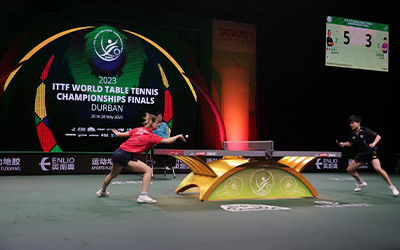
In the professional sports industry, certification is the only objective measure of quality. Flooring that is used in high-stakes environments must meet rigorous international standards to ensure athlete safety and fair play. Enlio has established itself as a leader by securing approvals from the world's most prestigious sporting bodies, including FIBA, BWF, ITTF, and ITF. These certifications guarantee that the flooring meets specific requirements for ball bounce, shock absorption, and surface friction.
Beyond sports-specific bodies, the commitment to manufacturing excellence is reflected in ISO9001, ISO14001, and OHSAS18001 certifications. These standards ensure that the production process is consistent, environmentally responsible, and safe for workers. Furthermore, CE and SGS certifications provide third-party verification that the materials used are non-toxic and meet the safety requirements for public and commercial use.
This level of compliance is critical for projects involving schools, universities, and government-funded recreational centers. When a supplier can provide a documented trail of international approvals, it mitigates the risk for the buyer and ensures that the facility will pass any required safety inspections. The association with global events, such as the FIBA 3X3 World Tour, serves as a real-world testament to the product's reliability under extreme usage conditions.
Strategic Procurement for Modern Athletic Facilities
Successful procurement of sports flooring requires a shift from "lowest price" thinking to "optimal lifecycle" thinking. A strategic approach involves analyzing the intended use-case—whether the court will be used for professional training, multi-sport community use, or a dedicated commercial club. For those researching the badminton synthetic court price, it is important to consider how different configurations, such as thickness and buckle types, affect the final quote.
We recommend a three-step evaluation process for buyers:
- Requirement Analysis: Determine if the court is indoor or outdoor. For outdoor areas, prioritize the modified rapid-drainage technology.
- Technical Validation: Check for BWF or FIBA approvals to ensure the surface meets competitive standards.
- Supplier Capability: Assess the supplier's logistics and after-sales service. A company with a robust supply chain and extensive warehouse capacity can ensure faster delivery and consistent product availability.
As the industry moves toward more sustainable and durable materials, investing in single-mold injection molding and environmentally friendly polymers is no longer optional—it is a necessity for future-proofing a facility. By focusing on high-performance characteristics today, owners can ensure their facility remains competitive and safe for years to come.
Frequently Asked Questions About Synthetic Court Surfaces
What factors most influence the cost of a synthetic badminton court?
The cost is primarily driven by the material grade, the thickness of the surface, the structural design (such as the Asterisk pattern), and whether the court is designed for indoor or outdoor use with specialized drainage features.
How does the Classic Asterisk pattern improve athlete performance?
The Asterisk pattern provides superior stability and impact resistance, which reduces the risk of surface deformation and provides a more consistent base for rapid lateral movements and lunges.
Is synthetic flooring suitable for outdoor installations in rainy climates?
Yes, provided the flooring utilizes modified technology for rapid drainage. This allows water to disperse quickly, preventing puddles and maintaining a safe, non-slip surface during unpredictable weather.
What is the benefit of a single-mold injection molding process?
Single-mold injection molding eliminates seams and weak points common in layered flooring, resulting in a more durable product with a significantly prolonged service life.
Which certifications should I look for when choosing a professional court supplier?
Look for approvals from sports governing bodies like BWF, FIBA, and ITTF, as well as quality and safety certifications such as ISO9001, CE, and SGS.
How does the elastic buckle system help with maintenance?
The elastic buckle system allows for a secure fit without excessive adhesives, making it much simpler to replace individual damaged tiles without having to tear up the entire court.
Industry Standards and Technical References
- BWF - Badminton World Federation Technical Standards
- FIBA - International Basketball Federation Flooring Requirements
- ISO - International Organization for Standardization
- SGS - Quality and Safety Certification Services
Selecting the right synthetic surface is a balance of technical specification and long-term financial planning. By prioritizing structural stability, weather resistance, and international certification, facility owners can create a world-class sporting environment that serves athletes safely and efficiently.