
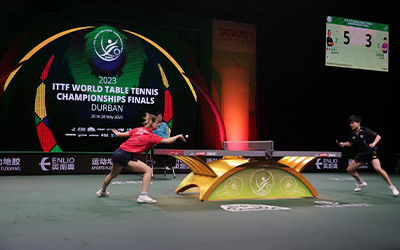

When planning a professional sports facility, determining the interlock tiles price is often a primary concern for project managers and athletic directors. These modular systems offer a flexible alternative to traditional poured surfaces, allowing for rapid deployment and versatile use across various sports. This guide examines the factors that influence the cost of modular flooring and how to balance upfront expenditure with long-term operational value.
The commercial viability of interlocking sports surfaces depends on more than just the per-square-meter cost. It involves an analysis of material quality, shock absorption capabilities, and the specific demands of the sport—whether it be the high-impact needs of Futsal or the precision required for basketball. For professional venues, the investment is shifted toward durability and athlete safety to reduce the risk of contusions and joint stress.
In the following sections, readers will learn how to evaluate the total cost of ownership, from initial procurement to installation and maintenance. We will explore the technical specifications that justify price variances and provide a framework for selecting a supplier that ensures consistent quality and adherence to international sporting standards, such as those set by FIBA and the ITF.
Understanding the Value of Modular Sports Flooring
Modular interlocking flooring has evolved from simple plastic mats to high-performance engineering systems. The core value lies in its "inter-lock portable design," which allows for fast installation and uninstallation, making it ideal for temporary tournaments or multi-purpose gymnasiums. Unlike traditional surfaces, these interlock tiles price variables are influenced by the structural design of the tile itself. For instance, a honeycomb base engineered for high impact will typically command a premium over flat-base tiles due to its superior energy return and shock absorption properties.
From an industry perspective, the shift toward modularity is driven by the need for sustainable and adaptable infrastructure. Modern tiles are often manufactured from environmentally friendly materials that withstand intense gameplay while remaining easy to replace. If a single section is damaged, only that specific tile needs replacement, rather than resurfacing the entire court. This modularity significantly lowers the long-term financial risk for facility owners, shifting the focus from the initial purchase price to the lifecycle cost of the facility.
Analyzing Cost Drivers and Selection Criteria
Selecting the right flooring requires a deep dive into the technical trade-offs between different product tiers. The total expenditure is rarely a flat rate but a sum of several technical and logistical components that vary based on the required performance level of the court.
Material Composition and Durability
The polymer blend used in the tiles determines their resistance to UV radiation and thermal expansion. High-grade polypropylene with specialized additives prevents warping in outdoor environments. The density of the material directly affects the surface's lifespan and its ability to resist heavy loads without deformation.
| Material Grade | Key Property | Primary Application | Value Impact |
|---|---|---|---|
| Standard Polymer | Basic Durability | Recreational Parks | Low Cost |
| UV-Stabilized PP | Weather Resistance | Outdoor Courts | Medium Cost |
| High-Impact Composite | Enhanced Shock Absorption | Professional Arenas | High Cost |
| Eco-Friendly Recycled | Sustainability | Green Building Projects | Variable |
| Heavy-Duty Industrial | Maximum Wear Resistance | Commercial Hubs | High Cost |
| Specialized Sport-Poly | Optimal Ball Bounce | FIBA/ITF Courts | Premium Cost |
Surface Treatment and Performance
Surface textures significantly impact athlete safety. For example, a 3D max treatment increases friction and wear resistance, which is critical for sports involving rapid pivots, such as Futsal or Basketball. The presence of micro-convex and concave patterns enhances anti-skid properties, reducing the likelihood of slips. These specialized finishes require more complex molding processes, which contributes to the overall pricing of the system.
Installation Complexity and Labor
While the interlocking mechanism is designed for simplicity, professional installation ensures perfectly level seams and proper perimeter locking. The labor cost varies depending on the substrate—whether it is concrete, asphalt, or an existing floor. A "flat surface without mesh" design simplifies the process but requires a precise base to ensure 360-degree free movement for athletes without impedance.
Certification and Compliance Standards
Procuring flooring that meets international standards (such as FIBA, BWF, or ITF) involves higher quality control costs. Certifications like CE, SGS, and ISO9001 ensure that the materials are non-toxic and the performance is consistent. For official championships, using an approved model—such as those used in the AFC Futsal Championships—is often a mandatory requirement, justifying the premium over generic alternatives.
Application Scenarios and Customization
Costs fluctuate based on the desired court layout and branding. Custom colors, integrated logos, and specific boundary markings increase the production complexity. A multi-purpose court designed for basketball, tennis, and roller hockey requires a balance of friction and bounce, leading to a specialized specification that may differ from a single-sport court.
Long-term Maintenance Costs
One of the strongest financial arguments for modular tiles is the reduction in maintenance. Unlike acrylic or hardwood, interlocking tiles do not require periodic sanding or repainting. Cleaning typically involves simple pressure washing or scrubbing. The ability to replace a single damaged tile prevents the need for costly full-court renovations, lowering the total cost of ownership over a 10-year cycle.
Supplier Capability and Logistics
The scale of the supplier's supply chain impacts the final quote. Companies with large-scale warehouse capacities and integrated R&D, like Hebei Enlio Sports Goods Co.,LTD, can often provide more competitive pricing due to economies of scale. Furthermore, the ability to provide after-sales service and installation guidance reduces the risk of costly installation errors that can occur with smaller, unverified vendors.
FAQ
What factors most influence the cost of modular sports tiles?
The primary drivers are material grade (such as UV-stabilized polypropylene), the structural design of the base (honeycomb vs. flat), surface treatment for friction, and the specific certifications required for the sport. Additionally, customization for logos and the total volume of the order significantly impact the final per-unit cost.
Are interlocking tiles more expensive than traditional poured flooring?
While the initial material cost for high-performance modular tiles may be comparable to professional poured surfaces, the total project cost is often lower due to reduced installation time and the absence of curing periods. Long-term, the maintenance costs are significantly lower because individual tiles can be replaced without affecting the rest of the court.
Can these tiles be used for multiple sports on one court?
Yes, modular tiles are highly versatile. Depending on the specifications, a single surface can be optimized for basketball, tennis, futsal, and roller hockey. The key is selecting a tile with the appropriate friction and shock absorption levels that meet the general requirements of all intended sports.
How do I verify the quality of a modular flooring supplier?
Check for international certifications such as ISO9001, CE, and SGS. For professional sports, verify if the product is approved by governing bodies like FIBA, ITF, or BWF. Reviewing the supplier's track record with global events, such as the FIBA 3x3 World Cup, provides strong evidence of their ability to meet professional standards.
What is the expected lifespan of professional interlocking tiles?
High-quality professional tiles are designed for long-term use, often lasting a decade or more depending on the usage intensity and environmental exposure. Regular cleaning and the prompt replacement of damaged tiles can extend the operational life of the entire system significantly.
Does the surface treatment affect athlete safety?
Absolutely. Specialized 3D max treatments and micro-convex patterns increase friction and provide anti-slip properties. This is critical for preventing injuries during high-speed directional changes, ensuring that athletes have a secure footing regardless of the intensity of the match.
References and further reading
- International Basketball Federation (FIBA) Court Specifications and Flooring Requirements.
- International Tennis Federation (ITF) Guidelines for Synthetic Surfaces.
- ISO 9001:2015 Quality Management Systems Standard for Manufacturing.
Related Articles