Look, wholesale vinyl flooring… it’s been a year, honestly. I’ve spent more time smelling adhesive than coffee, I swear. Everyone's talking about SPC now, stone plastic composite. Big push for waterproof, rigid core. Seems like every other project spec wants it. But don’t get me wrong, good old LVT—luxury vinyl tile—still holds its own. It’s not going anywhere.
To be honest, the biggest trend I'm seeing isn't a new material, but the wear layers. People want thicker, more durable stuff. They’re tired of replacing floors every couple years. I had a contractor yell at me last week about a 12-mil wear layer. “It’s junk!” he said. “Doesn’t hold up to a dropped wrench!” You know how it is.
And the embossed-in-register stuff… that’s gotten really good. It feels like wood, or stone, or whatever you’re going for. Used to be, it felt like… well, plastic. But now? It’s almost uncanny. I spent a good ten minutes last month trying to decide if a sample was real oak or vinyl. It was vinyl, naturally.
The Recent Trends in Wholesale Vinyl Flooring
Have you noticed the shift towards eco-friendly options? I mean, everyone says they want it, but the demand is really picking up. Recycled content, low VOC emissions… those are becoming standard requests. Strangely, a lot of the really cheap stuff smells awful. Like, seriously, it'll clear a room. You can tell the good stuff just by the smell – a little plasticky, sure, but not overwhelming.
Another thing? Dry-back versus click-lock. Click-lock is easier to install, obviously. But dry-back is still preferred for high-traffic areas. It's just more secure. I encountered this at a hospital renovation last time. They wouldn't touch click-lock with a ten-foot pole. Too much risk of it coming apart with all the gurneys and wheelchairs.
Design Pitfalls to Watch Out For
Honestly, the biggest mistake I see is trying to make vinyl look too real. It's vinyl. Embrace it! Trying to perfectly mimic wood grain often just looks… off. It's uncanny valley territory. A slightly more stylized look tends to work better.
And don’t underestimate the importance of pattern repeat. A short repeat is a dead giveaway of cheap material. I swear, I can spot a bad pattern repeat from across a warehouse. It just looks… busy. It's jarring.
Also, be careful with bevels. A really deep bevel can hide imperfections, but it also makes the floor feel less smooth underfoot. It’s a balancing act.
Material Deep Dive: What We're Actually Using
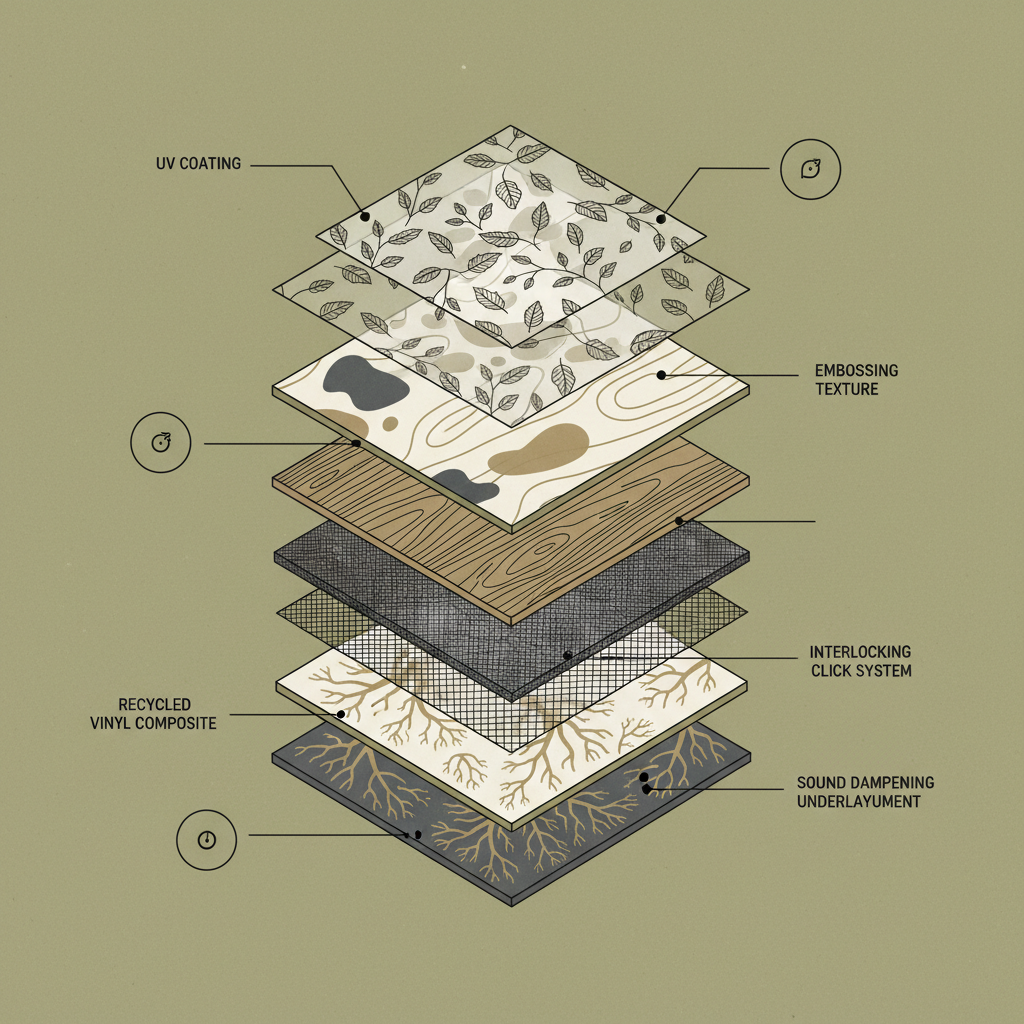
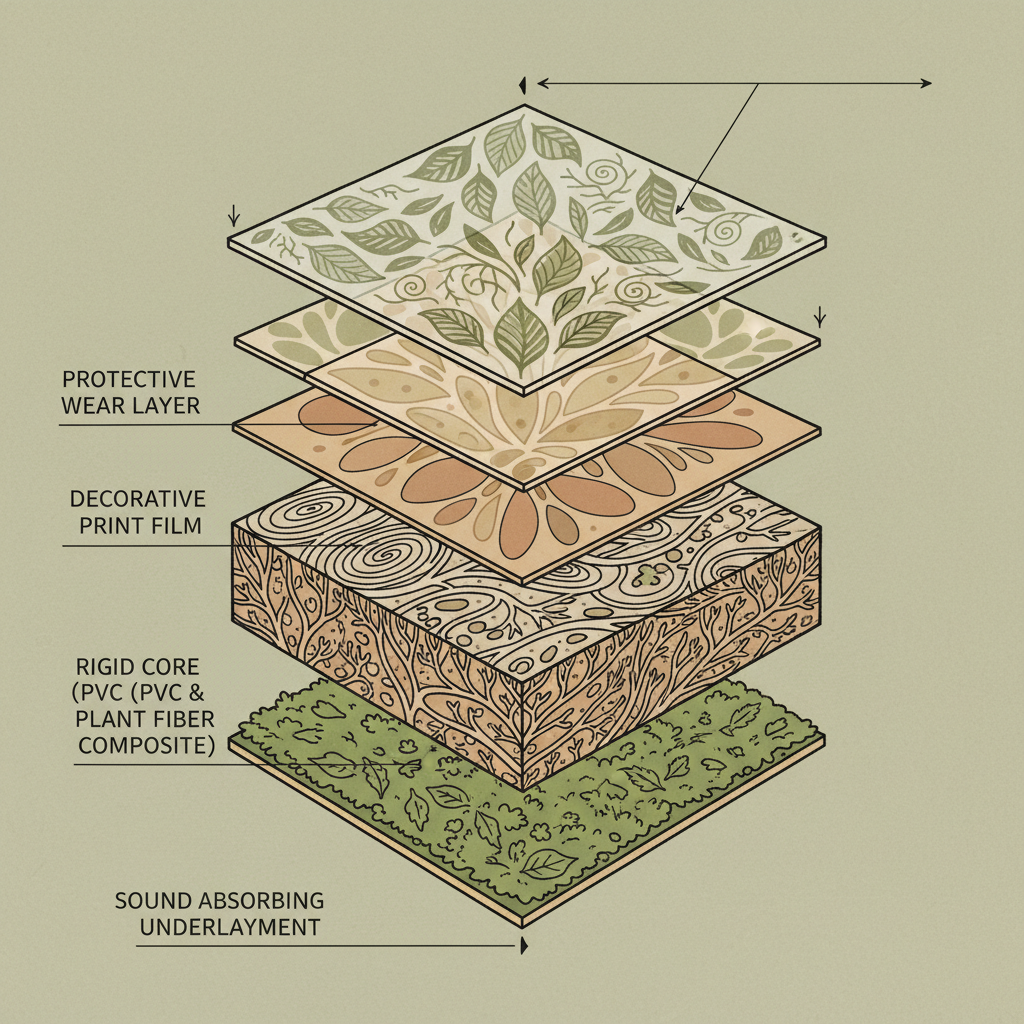
Okay, so the base layer is usually PVC – polyvinyl chloride. That’s the workhorse. It feels… well, plasticky, obviously. A little cold to the touch. The quality of the PVC makes a huge difference. Cheap PVC is brittle and smells terrible. Good PVC is flexible and has a cleaner smell.
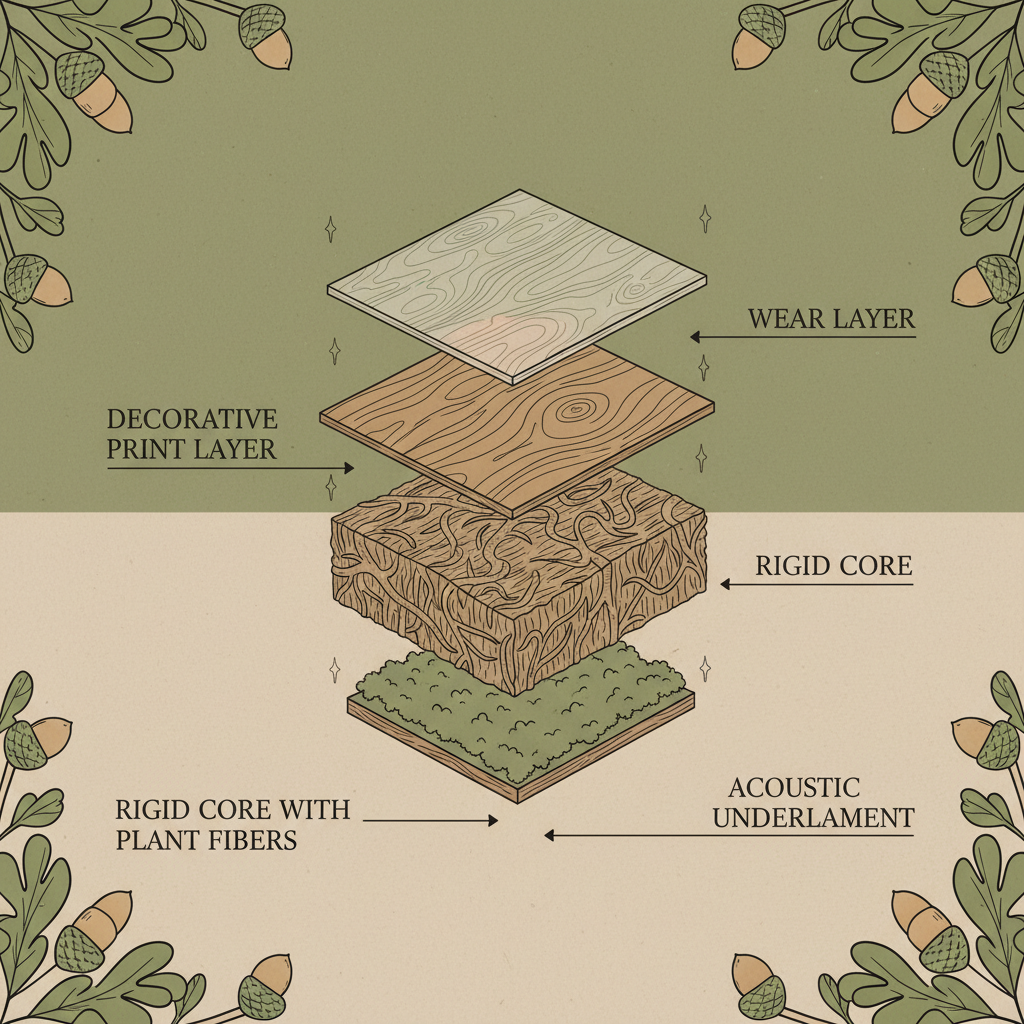
Then you've got the wear layer – that’s usually polyurethane or vinyl. Polyurethane is tougher, more resistant to scratches. It’s also more expensive. The thicker the wear layer, the better, as we said before. I’ve seen some really thin wear layers that scratch if you just look at them. Seriously. It's depressing.
And the core layer… that's where you get the SPC stuff. Stone plastic composite. Feels solid, dense. It doesn't flex like regular vinyl. It’s… different. It's also a pain to cut with a utility knife, let me tell you. You need a scoring knife and a good snap.
Real-World Testing and Performance
Look, lab tests are fine. Abrasion resistance, impact resistance, chemical resistance… all that stuff. But the real test is what happens when a forklift drops a pallet of bricks on it. (Okay, maybe not bricks, but you get the idea).
We do a lot of on-site testing. We drag furniture across it, we drop tools, we spill coffee (a lot of coffee). We even have a guy who purposely tries to scratch it with a coin. It's a surprisingly important job, actually.
Wholesale Vinyl Flooring Performance Metrics
How Users Actually Use Wholesale Vinyl Flooring
This is where it gets interesting. You think people will take care of it, right? Gentle cleaning, furniture pads, no dragging stuff across the floor. But… they don’t. They spill things. They drop things. They track in mud. It's inevitable.
I’ve seen it all. Restaurants with constant spills. Schools with hundreds of kids running around. Hospitals with… well, everything. You have to design for the worst-case scenario. That’s why those thicker wear layers are so important.
Advantages, Disadvantages, and Customization
Advantages? It's waterproof, durable, relatively affordable, and easy to install. What's not to like? Disadvantages? It doesn't feel as warm as wood or tile. And it can dent if you’re not careful. And it’s still plastic, let’s be real. It’s not the most eco-friendly option.
But the customization options are pretty good. You can get it in any color, any pattern, any size. I had a customer last year who wanted a custom pattern printed on it. A giant floral design. It was… intense. But we did it. We can even do embossed-in-register patterns with custom textures. It’s expensive, but it’s possible.
A Customer Story: The Interface Saga
Last month, that small boss in Shenzhen who makes smart home devices insisted on changing the interface to for our flooring samples. Said it was “the future.” He wanted a sleek, modern presentation box with a USB-C charging port for a little LED light inside that showed off the texture. He said it would “elevate the brand”.
Anyway, I think it cost us a fortune. The boxes were delayed, the LEDs were flickering, and the whole thing just seemed… unnecessary. He was convinced it was genius. The samples finally shipped, and he calls me a week later, completely exasperated. Turns out, half of his potential clients didn’t have USB-C chargers! He ended up having to send out adaptors.
He apologized, but honestly, it just confirmed my belief that sometimes, simple is better.
Key Material Comparison for Wholesale Vinyl Flooring Projects
| Material Type |
Cost (per sqm) |
Durability Rating (1-10) |
Ease of Installation (1-10) |
| Luxury Vinyl Tile (LVT) |
$20 - $40 |
7 |
8 |
| Stone Plastic Composite (SPC) |
$25 - $50 |
9 |
7 |
| Vinyl Sheet |
$10 - $30 |
6 |
6 |
| Rigid Core Luxury Vinyl Plank (RCLVP) |
$30 - $60 |
8 |
7 |
| Bio-Based Vinyl Flooring |
$40 - $70 |
7 |
8 |
| Commercial Grade Vinyl Tile |
$50 - $80 |
9 |
6 |
FAQS
For high-traffic areas like commercial kitchens or busy hallways, you really want to aim for at least a 20-mil wear layer. Anything less and you'll be replacing it far too often. I’ve seen 12-mil stuff get shredded in months. It's not worth the headache, even if it saves a few bucks upfront.
SPC is fantastic in humid environments. That’s one of its biggest advantages. Because it’s waterproof and dimensionally stable, it won’t warp or swell like traditional vinyl. I’ve installed it in bathrooms, laundry rooms, even sunrooms. No problems. It's a lifesaver for coastal areas.
That's a tough one. It's PVC, which isn't exactly eco-friendly. But manufacturers are starting to use recycled content and low-VOC adhesives, which helps. Look for certifications like FloorScore or GreenGuard. It's not perfect, but it's getting better. It’s better than constantly replacing other types of flooring, at least.
The biggest issue is an uneven subfloor. If the subfloor isn't perfectly flat, the planks can come apart over time. You need to make sure it’s properly prepped. Also, sometimes the locking mechanisms break, especially if you're forcing them. I’ve seen guys get so frustrated they just start gluing everything down.
You can, but it depends. The tile needs to be perfectly flat and clean. Any cracks or unevenness will telegraph through the vinyl. You may need to use a self-leveling compound to create a smooth surface. It adds extra work, but it’s often worth it to avoid ripping out the tile.
Traditional embossing creates a random texture. Embossed-in-register matches the texture to the printed pattern, making it look much more realistic. It’s a subtle difference, but it makes a big impact on the overall look and feel. It's also more expensive to produce, naturally.
Conclusion
Ultimately, wholesale vinyl flooring is a workhorse material. It’s not glamorous, it’s not always the most eco-friendly, but it gets the job done. It’s durable, affordable, and relatively easy to install. It’s the kind of flooring that doesn’t demand attention, but quietly performs day after day. We've seen trends come and go, materials rise and fall, but vinyl always sticks around.
Anyway, I think the key is to understand its limitations and choose the right product for the application. Don't try to make it something it's not. And remember, no matter how much testing we do in the lab, or how fancy the marketing materials are… ultimately, whether this thing works or not, the worker will know the moment he tightens the screw.